


Walter Benjamin once wrote that a work of art carries an “aura”—a strange and fragile force that comes from its singularity, from its being here and now, unrepeatable, unreplicable. He was talking about mechanical reproduction and how it chips away at the soul of the artwork. But even today, decades later and worlds away from that early 20th-century context, I keep circling back to that word. Aura. There’s something timeless about it, something that quietly holds together many of the questions we ask—about value, about truth, about why certain works stay with us long after others fade.
A little while ago, I was sitting with a group of painter friends, and at some point, the conversation turned to authenticity in art. Not the bureaucratic side of it—documents, provenance—but the real, inner side. What it means for a work to be truly personal, unmistakably one’s own. We circled around the topic for a while, exchanging thoughts and doubts and disagreements, until it became clear to me that this wasn’t just a passing thread. It deserved more. So I decided to write.
Because this is not just a philosophical exercise. In a world where images are everywhere, where styles loop and repeat, and the market demands louder and faster turns of production, the matter of authenticity—real, human, artistic authenticity—has become one of the few anchors we still have.
I’m talking about the kind of authenticity that begins in solitude, before the work exists, when the artist is still unsure but committed to seeing something through. The kind that shows itself not in gimmicks or cleverness but in the accumulated force of a voice developing over time. It’s what you feel in an Agnes Martin grid: not minimalism, but devotion. It’s in the layered density of Julie Mehretu’s maps, not just as compositions, but as mappings of thought, culture, displacement. This isn’t about aesthetics. It’s about necessity.
And here’s the thing—this kind of necessity doesn’t just matter for the soul of the work. It also matters for its place in the world. For its value, even in that pragmatic sense. Because when collectors buy art, they’re not just buying materials and technique. They’re buying conviction. They’re buying the sense that this couldn’t have been made by anyone else, that it wasn’t designed to sell or to flatter, but to exist because it had to. That difference—between what’s sincerely driven and what’s superficially crafted—is something people feel, even if they can’t always name it.
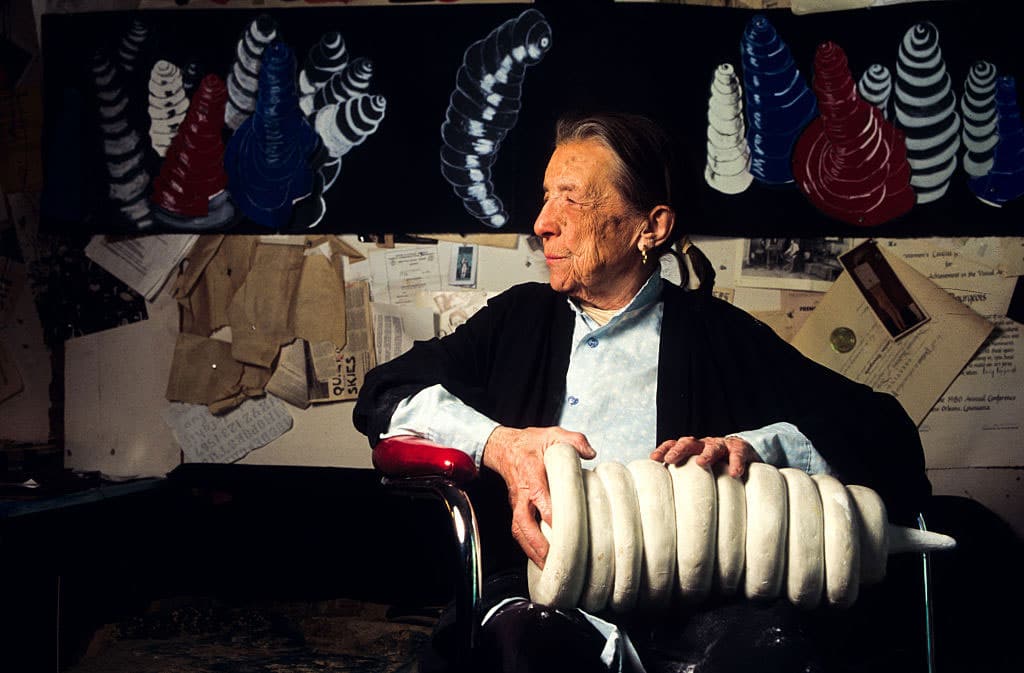
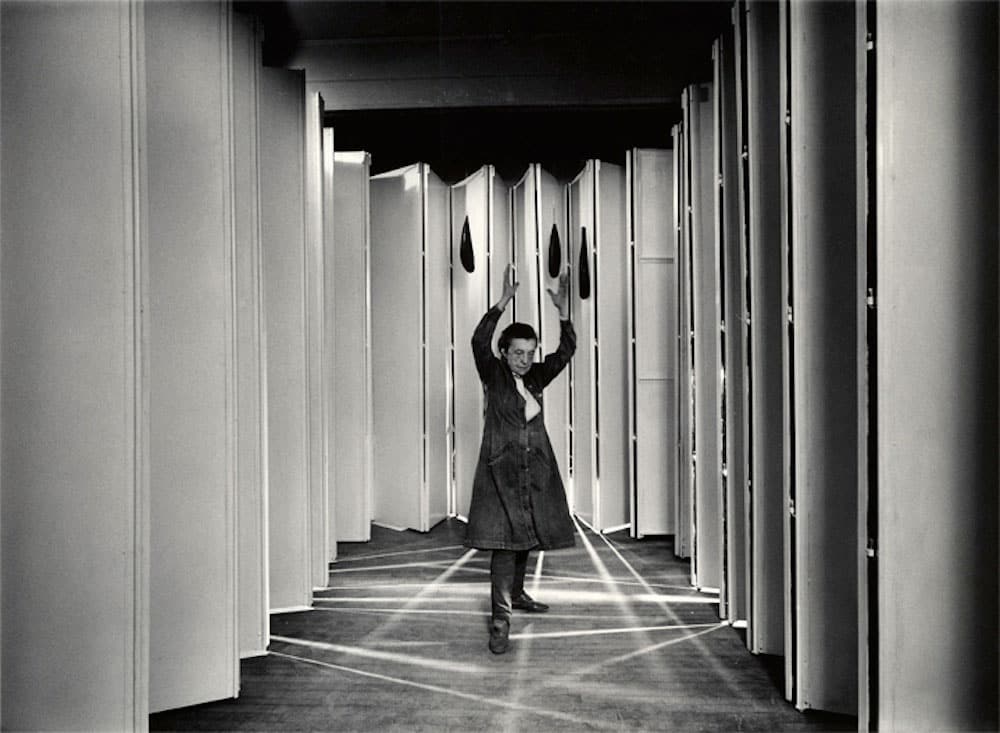
It’s why artists like Louise Bourgeois, whose work emerged slowly over decades of fiercely personal inquiry, ultimately commanded the world’s attention. Her sculptures weren’t made to please or provoke trends—they were made because they needed to exist. And it’s why the market continues to chase after the works of artists whose styles are unmistakably their own—Rothko, Kusama, Martin—not because they followed trends, but because they didn’t. They committed to a path, and that commitment created its own gravitational pull. Their works aren’t just recognizable. They’re irreplaceable.
This is also why artists who produce derivative or trend-chasing work might flare brightly and disappear just as quickly. We saw this with the whole “zombie formalism” wave not so long ago—abstract paintings that looked new but felt hollow. They weren’t rooted in anything deeper than surface effect. Collectors bought them fast, and then the value evaporated. Because once the hype clears, what remains is the question: does this work matter? Does it carry that sense of being meant?
It’s important to say, though, that authenticity isn’t a look. It’s not rawness or imperfection or doing things by hand. It’s not sincerity as style. It’s deeper than that—something felt, not performed. It can exist in a polished conceptual installation just as much as in a trembling line of ink. It can speak loudly or whisper. But when it’s real, it gives the work a kind of inner temperature. And that temperature tends to attract attention. Serious collectors notice it. Curators return to it. Critics find language for it. Even the market, for all its chaos, tends to reward it over time.
There’s no formula for this, which is why it can’t be manufactured. But it can be lived into. The artists who hold onto their own thread—even when it’s slow going, even when it’s invisible at first—are often the ones who build something lasting. Their work develops a coherence, not because they stay the same, but because they evolve from a real center. And in the long view, that center is what people trust. It’s what they return to.
So yes, in the midst of everything else—exposure, trends, institutions, market swings—authenticity might seem like just one variable. But it’s more than that. It’s the variable that gives weight to the others. It’s what makes a new style feel like something more than novelty. It’s what allows critical praise to stick, what gives institutional support substance, and what keeps a collector from reselling when the market shifts.
And if I sound passionate about this, it’s because I am. Not just as a writer or observer, but as someone who’s watched too many artists get pushed toward sameness, speed, safety. And too many others, quieter ones, stay the course and create work that might not roar at first but lingers, deepens, earns its place.
That’s what art is for. That’s where its value lies. Not in its ability to echo what’s already loud, but in its ability to express something only one person could have made, from one position in the world, at one moment. That’s authenticity. And it’s more than a virtue—it’s the spine of the whole thing.